Key Takeaways
- Regular inspections help Sydney business properties find ponding, membrane defects, and drainage issues before they become active leaks
- Gutters, box gutters, outlets and downpipes need to be checked as one drainage path
- Dated photos and repair priorities help property managers plan work
- Maintenance budgets should account for inspection, reporting, cleaning, and minor repair allowances
Quick Answer
Flat and low-slope roofs need regular attention to drainage, membranes or metal sheets, penetrations, flashings and areas where water ponds. Maintenance should record what was checked, what needs repair and what can be monitored.Why Drainage Matters
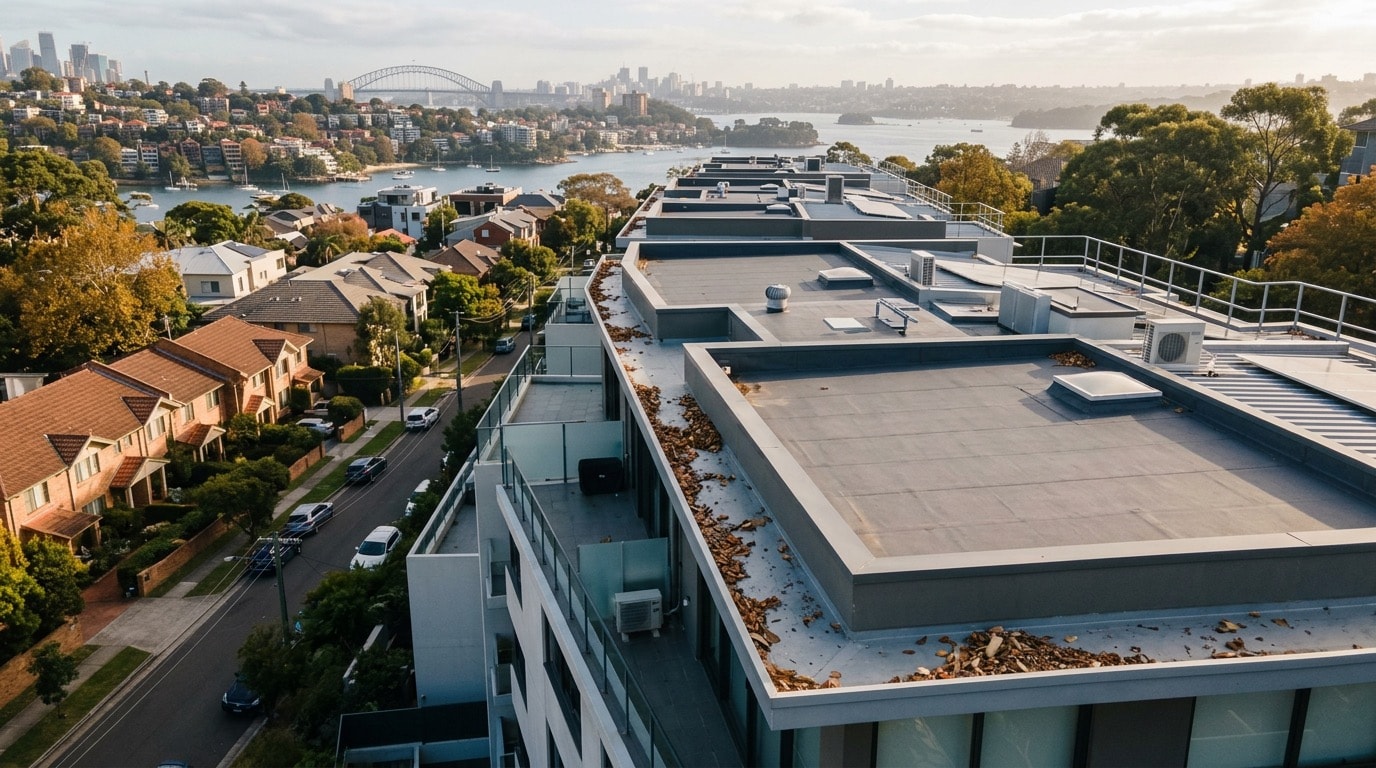
Water moves more slowly across a low-slope roof. Blocked outlets, poor falls, damaged box gutters or debris can leave water sitting on the roof or overflowing into the building. Check gutters, sumps, outlets and downpipes as one drainage path. Clearing one visible blockage may not resolve a damaged outlet, inadequate fall or hidden restriction.Roof Surfaces And Joins
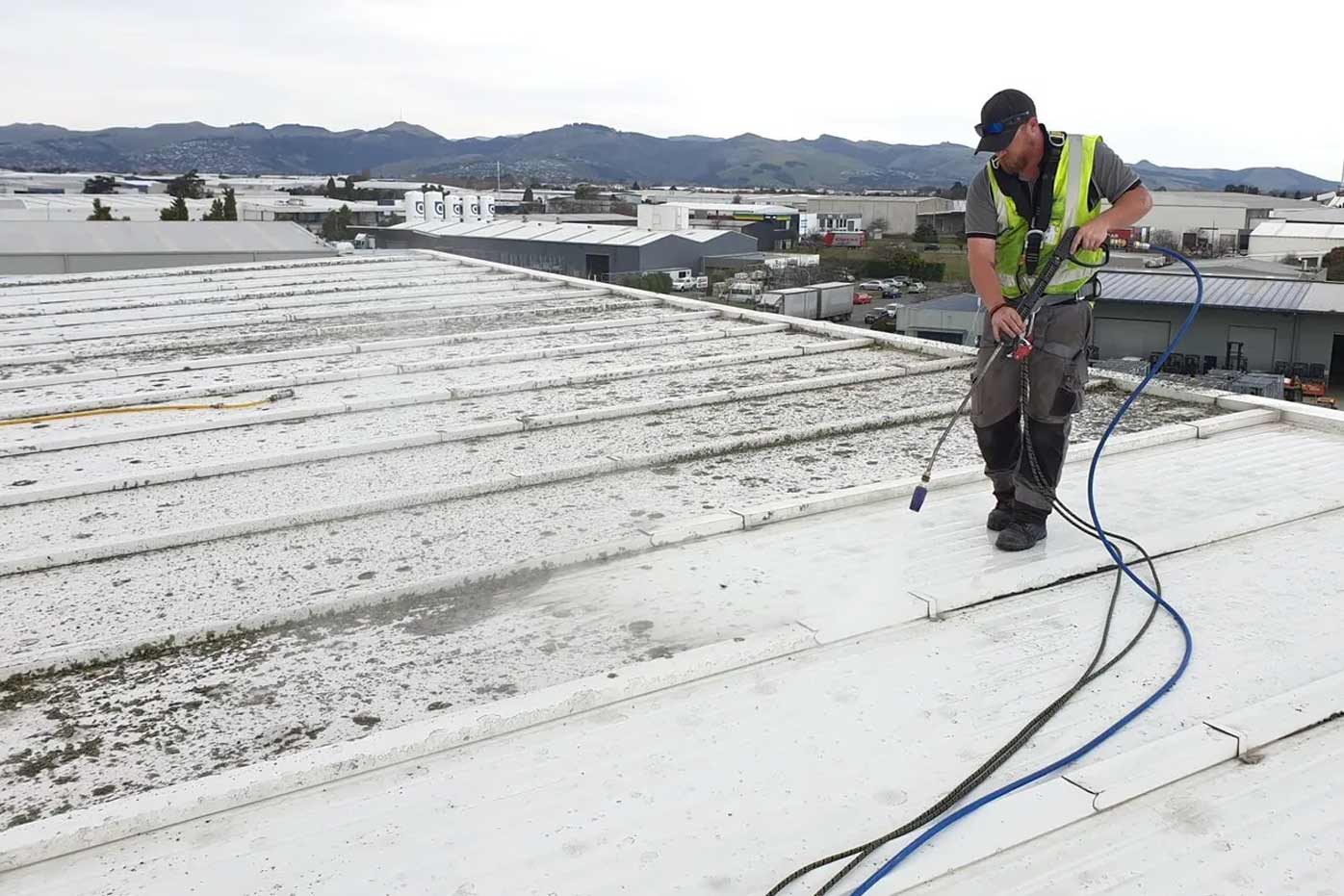
Flat roofs may use membranes, metal sheeting, coatings or a combination of materials. Look for lifted joins, splits, blisters, punctures, loose fixings, visible corrosion and previous repair areas. Repairs need to be compatible with the existing roof material. Applying an unrelated sealant over a wet or poorly prepared surface can hide the fault without resolving it.Penetrations And Roof Equipment
Skylights, vents, pipes, plant supports and wall junctions interrupt the roof surface. Their flashings, seals and surrounding drainage should be included in the inspection. If equipment has been added or moved, check that the roof covering and drainage were not damaged during the work.Safe Access And Building Use
Commercial roof maintenance should account for safe access, tenants, staff, stock, equipment and work areas below the roof. Some tasks may need to be staged or completed outside normal operating times. Urgent after-hours calls are accepted for active leaks or unsafe roof conditions. Planned maintenance and reporting can be scheduled around the property once access needs are understood.Useful Maintenance Records
Keep:- dated photos of roof areas and drainage points
- notes on ponding or overflow after rain
- previous repair locations
- roof-mounted equipment changes
- items completed during the visit
- repair work that needs a separate quote
When Maintenance Becomes Repair Work
Active leaks, failed membranes, damaged sheets, widespread corrosion or repeated ponding may need flat roof repairs rather than routine maintenance. Send the roof type, affected area, access details, building use and safe photos with the enquiry. For a wider program, see commercial roof maintenance.
BL Roofing Solutions
Licensed Sydney Roofing Company
Licensed Roofing CompanyTile and Metal RoofsWritten Quotes
BL Roofing Solutions provides roof repairs, restoration, replacement, metal roofing, painting, maintenance and commercial roofing across its published Sydney service area.
Contact Us